Understanding Payment Processing Fees and Savings

Payment processing costs add up quickly for small businesses. The fee structures can feel opaque, vary by provider, and often hide add-ons that erode margins. With a clear view of how fees work—and where you can negotiate—you can meaningfully reduce costs without sacrificing reliability.
This guide breaks down the key components of processing fees, common pricing models, what drives costs up or down, and practical ways to lower your total cost of acceptance.
What Are Payment Processing Costs?
Payment processing costs are the fees charged to accept credit and debit cards (and, in some cases, ACH or digital wallets). Multiple parties touch a card transaction—banks, card networks, payment gateways, and processors—and each assesses fees that roll up into your effective rate.
Core components:
- Interchange fees: Set by the card networks and paid to issuing banks. Non-negotiable, and usually the largest portion.
- Assessment fees: Small network fees charged by Visa/Mastercard/Discover/AmEx, based on volume. Also non-negotiable.
- Processor markups: Your processor’s margin over interchange and assessments. This is the negotiable part.
- Payment gateway fees: Charges for the tech that securely authorizes online transactions (set-up, monthly, per-transaction).
Typical effective ranges: Many businesses see all-in effective rates from ~1.5% to 3.5%+ per transaction, depending on card type, channel (card-present vs. eCommerce), and provider. High-Risk merchants can see rates that are double than this. The goal isn’t just “lowest headline rate”—it’s the lowest total cost for your actual mix of transactions.
The Components Explained
Interchange Fees
- What they are: Base costs set by the networks to compensate issuing banks.
- Why they vary: Card type (debit vs. credit, rewards vs. corporate), transaction method (swiped/chip/tapped vs. keyed or online), and data quality (AVS/CVV, level-2/3 data).
- What you can do: You can’t negotiate interchange, but you can optimize for lower-cost categories (e.g., encourage debit where appropriate, capture AVS/CVV, and pass additional data on B2B transactions).
Assessment Fees
- What they are: Small network fees on volume.
- What you can do: Not negotiable; focus on reducing your markup and improving interchange qualification to offset assessments.
Processor Markups
- What they are: Your negotiable margin above interchange and assessments.
- What to watch: Basis points (bps) and per-transaction fees, monthly minimums, PCI fees, statement fees, and “non-qualified” surcharges.
- What you can do: Negotiate based on volume, stability, and chargeback history. Compare competing offers apples-to-apples.
Payment Gateway Fees
- What they are: Charges for online authorization, tokenization, and routing.
- Typical structure: Setup, monthly platform fee, and a per-transaction fee.
- What you can do: Ensure you’re only paying for features you use; consolidate tools where possible; confirm that gateway + processor pairing yields the best blended cost.
Common Pricing Models (and When They Fit)
Choosing the right pricing model has a major impact on your effective rate.
1) Flat-Rate Pricing
- How it works: One simple percentage (and sometimes a small per-txn fee) for most transactions.
- Pros: Easy to understand and forecast. Great for low volume and very simple setups.
- Cons: Can be more expensive at scale; limited transparency into true costs.
2) Interchange-Plus (Cost-Plus)
- How it works: Your exact interchange + assessment fees plus a fixed, disclosed markup (e.g., +20 bps and $0.10/txn).
- Pros: Transparent, scalable, typically best for growing or higher-volume merchants; easier to compare quotes.
- Cons: Statement can look more complex; requires basic understanding of interchange.
3) Tiered Pricing
- How it works: Transactions fall into “qualified,” “mid-qualified,” and “non-qualified” tiers with different rates.
- Pros: Familiar, simple-looking proposal.
- Cons: Opaque and often costlier; many transactions end up in higher-priced tiers. Hard to audit.
4) Membership / Subscription Models
- How it works: Monthly/annual fee plus very small per-txn markups; interchange is passed through.
- Pros: Predictable and potentially low effective rates for consistent volume.
- Cons: Monthly fees can outweigh benefits for low volume; watch add-ons.
Rule of thumb:
- Smaller volume or new business → Flat-rate can be fine initially.
- Established or scaling volume → Interchange-plus or subscription often yields better long-term savings.
What Influences Your Costs?
A few levers can swing your effective rate up or down:
- Transaction volume & average ticket: Higher volume and stable history improve negotiating power; larger tickets can change the economics of % vs. per-txn fees.
- Business type & risk: High-risk categories pay more due to fraud and chargeback exposure.
- Payment methods: Credit > Debit > ACH in cost (generally). Steering to lower-cost rails can meaningfully reduce spend.
- Channel & data quality: Card-present with chip/tap is cheaper than keyed or eCommerce; collecting AVS/CVV and using 3-D Secure/advanced data can lower risk and interchange category.
- Geography: Cross-border transactions often add surcharges; regional rules differ.
Hidden and Additional Fees to Watch
Small add-ons can silently inflate your effective rate. Review agreements for:
- Monthly minimums: Fees applied if you don’t meet a set processing volume.
- Early termination fees or liquidated damages: Costly exits; negotiate removal or caps.
- PCI compliance/non-compliance fees: Ensure you’re validated to avoid penalties.
- Statement, batch, and support fees: Individually small, collectively meaningful.
- Chargeback fees: Per dispute; strong prevention programs can offset.
Ask for a comprehensive fee schedule in writing and verify against monthly statements.
How Fees Impact Small Businesses
Processing costs directly reduce margin. For high-volume merchants, a 20–40 bps difference can translate to thousands (or more) per year. Beyond pure cost:
- Cash-flow predictability suffers with volatile effective rates.
- Operational overhead rises when statements are hard to reconcile.
- Growth planning becomes difficult without fee transparency.
Regular reviews keep your total cost of acceptance aligned with your goals.
Strategies to Reduce Payment Processing Fees
You can’t change interchange, but you can optimize around it and cut markups.
1) Negotiate Your Processor Markup
- Gather 12 months of statements to show volume and stability.
- Request interchange-plus (or transparent membership pricing).
- Compare bps + per-txn quotes across multiple providers.
- Tie concessions to term length, gateway consolidation, or equipment.
2) Optimize Interchange Qualification
- Encourage debit where appropriate (lower cost than rewards credit).
- Capture AVS/CVV, use 3-D Secure for eCommerce risk.
- For B2B, send level-2/3 data to qualify for lower interchange.
- Minimize keyed entries; prefer chip/tap or tokenized online flows.
3) Reduce Chargebacks and Fraud
- Enable address verification, CVV checks, velocity limits, and device fingerprinting.
- Use fraud scoring and step-up authentication for risky orders.
- Publish clear policies on refunds, shipping, and customer communication.
- Track win/loss and reason codes; close the loop on root causes.
4) Choose Cost-Effective Payment Methods
- Offer ACH (often pennies per transaction) for invoices, subscriptions, or higher-ticket payments.
- Support digital wallets (fast, secure, lower fraud) where your customers use them.
- Consider surcharging or cash-discount programs only where compliant and customer-friendly.
5) Leverage Technology & Automation
- Use a gateway or platform with smart routing, account updater, and automatic card-on-file refresh.
- Set up dunning for subscription retries (timing matters for approval rates).
- Monitor authorization rates, soft declines, and retry logic.
6) Audit Regularly
- Quarterly or semiannual reviews of effective rate (total fees ÷ total processed).
- Flag creeping fees, new surcharges, and tier downgrades.
- Confirm that promised pricing matches the statement.
Comparing Payment Processors: What to Look For
Don’t pick solely on a teaser rate. Evaluate:
- Pricing transparency: Interchange-plus detail, full fee schedule, no gotchas.
- Integration & features: POS/eComm platform fit, invoicing, tokenization, stored credentials, account updater.
- Fraud & risk controls: Tools included (3-D Secure, rules engine, chargeback management).
- Reporting & analytics: Clear dashboards for fees, auth rates, and disputes.
- Support & SLAs: Real humans, responsive timelines, and clear escalation paths.
- Contract terms: Month-to-month vs. long term; hardware leases; termination language.
Create a side-by-side comparison using your actual volumes and mix to project true total cost.
Quick Case Example: Savings in Practice
A specialty retailer processing $300k/month at a 2.95% flat rate moved to interchange-plus + 25 bps and $0.08 per txn with a modern gateway. By steering 15% of recurring payments to ACH and improving data capture for B2B cards, their effective rate dropped ~55 bps, saving ~$1,650/month—funding new inventory turns and paid acquisition.
FAQs
Q: Are interchange fees negotiable?
A: No. But you can qualify for lower categories with better data and methods.
Q: What pricing model is best for high volume?
A: Usually interchange-plus or membership for transparency and scale.
Q: How do I find hidden fees?
A: Request a full fee schedule and reconcile it against your monthly statement; calculate your effective rate.
Q: How can I reduce eCommerce fraud costs?
A: Use AVS/CVV, 3-D Secure, velocity limits, and a rules engine; review chargeback reason codes monthly.
Key Takeaways and Next Steps
- Your effective rate matters more than any single quoted percentage.
- Interchange is fixed, but markup, methods, fraud controls, and data quality are in your control.
- Review contracts and statements regularly; negotiate with data in hand.
- Use technology (account updater, dunning, smart routing) to improve approvals and lower cost.
Create a 90-day plan: audit your last three statements, request two competitive interchange-plus quotes, enable AVS/CVV + 3-D Secure, and pilot ACH for recurring or high-ticket payments. Measure the delta in approval rates, chargebacks, and effective cost.
Next Step: Explore High-Risk–Friendly Savings with Zenti
If your business is considered higher-risk—or you’re seeing inconsistent approvals and creeping fees—specialized support can make a measurable difference. Zenti provides high-risk merchant accounts and secure payment gateways with transparent cost-plus pricing and tools to reduce declines and disputes.
- Tailored pricing for your actual mix and risk profile
- Built-in fraud controls and chargeback support
- Options for ACH and alternative payments to lower cost
Curious what you could save? Get pre-approved with Zenti to benchmark your current effective rate and uncover practical, compliant ways to reduce fees—without disrupting how your customers pay.
Read Next
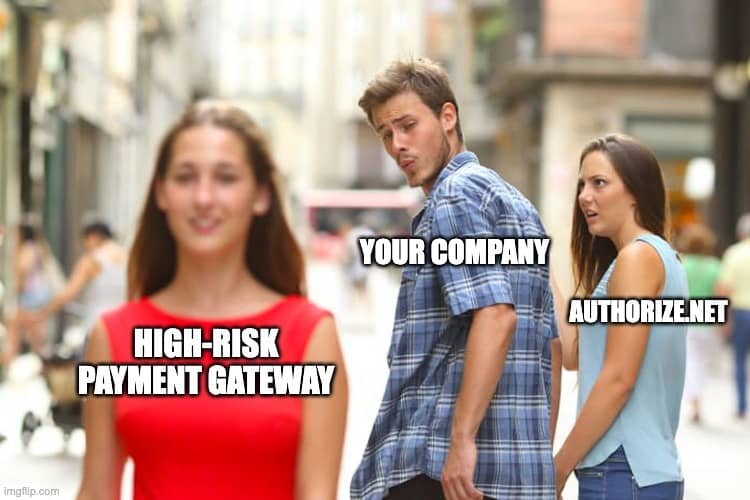
Find out whether Authorize.Net works for high risk merchants, what restrictions you might face and how to get approved.

Get expert advice on selling CBD products on Shopify, including compliance tips and setting up secure payment options.

Find out why Square may deactivate merchant accounts and steps to resolve issues and maintain uninterrupted payment services.
Need a High-Risk Merchant Account?
Disruption-free payment processing at the best price for your situation, guaranteed.
Get Free Guidance Now!